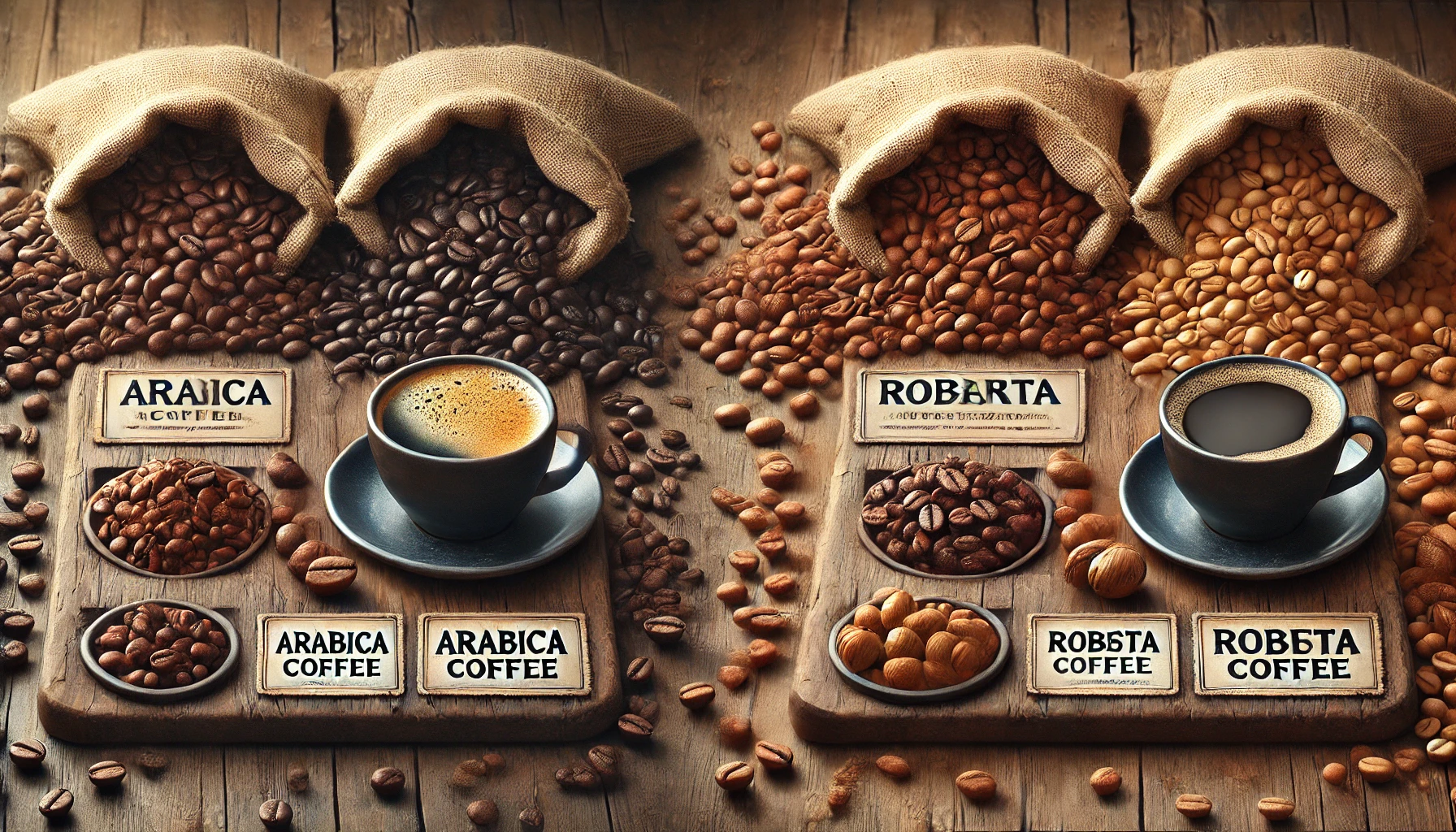
If you’ve ever browsed the coffee aisle at the store or read a label on a fancy bag of beans, you’ve probably seen the terms Arabica and Robusta. These are the two most common types of coffee beans in the world — and they’re very different. From taste and aroma to caffeine content and growing conditions, Arabica and Robusta each have their own personalities.
In this article, we’ll break down everything you need to know to understand and choose between Arabica and Robusta coffee.
A Quick Overview
| Feature | Arabica | Robusta |
|---|---|---|
| Scientific Name | Coffea arabica | Coffea canephora |
| Flavor Profile | Sweet, fruity, floral | Bitter, earthy, nutty |
| Caffeine Content | Lower (~1.2%) | Higher (~2.2%) |
| Acidity | Higher | Lower |
| Bean Shape | Oval with curved crease | Rounder with straight crease |
| Resistance to Disease | Lower | Higher |
| Altitude Preference | High (600–2000m) | Low (0–800m) |
| Price | More expensive | More affordable |
Now let’s explore these differences in more detail.
1. Taste and Aroma
The flavor is the most obvious difference. Arabica is known for its smooth, nuanced, and aromatic taste. Depending on the origin and roast, you might detect notes of chocolate, berries, citrus, or even floral tones.
Robusta, on the other hand, tends to be stronger, more bitter, and more earthy. It often has a grainy or nutty flavor, and some people describe it as having a “burnt rubber” aftertaste — though high-quality Robusta can be quite pleasant and chocolaty.
If you love a milder, more refined coffee, Arabica is probably your match. If you prefer something strong, intense, and punchy, Robusta could be your style.
2. Caffeine Content
Robusta beans contain almost twice as much caffeine as Arabica beans. Caffeine doesn’t just wake you up — it also acts as a natural pesticide, which is one reason why Robusta plants are more resistant to pests and diseases.
This higher caffeine content gives Robusta a sharper bitterness, while Arabica’s lower caffeine levels contribute to its smoother, sweeter taste.
So, if you need a serious energy boost, Robusta is the heavy hitter. For a gentler wake-up call, Arabica is ideal.
3. Growing Conditions
Arabica beans thrive in cooler climates and higher elevations, usually between 600 and 2000 meters. These conditions are found in places like:
- Ethiopia
- Colombia
- Kenya
- Brazil (some regions)
- Guatemala
Arabica is also more sensitive to temperature changes and diseases, making it harder and costlier to grow.
Robusta, by contrast, grows at lower elevations and in hotter, more humid climates. It’s commonly cultivated in:
- Vietnam
- Indonesia
- India
- Uganda
Robusta is tougher, grows faster, and produces a higher yield — which is why it’s generally cheaper.
4. Appearance of the Beans
Visually, Arabica and Robusta beans are easy to tell apart if you know what to look for.
- Arabica beans: Larger, oval-shaped, with a curved crease.
- Robusta beans: Smaller, rounder, with a straight crease.
Roasted Robusta beans often appear darker and shinier due to their higher caffeine and lower sugar content, which affects how they caramelize during roasting.
5. Price and Availability
Because Arabica is harder to grow and more sensitive to pests and climate, it’s more expensive. Most high-end specialty coffees are 100% Arabica.
Robusta is more affordable and is widely used in:
- Instant coffee
- Supermarket blends
- Some espresso blends (especially Italian-style)
You’ll often see blends like 70% Arabica / 30% Robusta, which balance the body and crema of Robusta with the flavor of Arabica.
6. Use in Espresso
One area where Robusta shines is in espresso. Robusta beans produce a thicker crema (the golden foam on top of espresso), which adds body and texture to the shot. That’s why many Italian espresso blends include a percentage of Robusta.
Arabica, while producing a more flavorful shot, may not deliver the same crema volume or punch.
So if you’re making espresso and love that velvety crema, a blend might be the best choice.
7. Health and Nutritional Content
Both Arabica and Robusta contain antioxidants, minerals, and natural compounds that can benefit health when consumed in moderation. However:
- Robusta’s higher caffeine may cause jitters or digestive issues for sensitive individuals.
- Arabica is easier on the stomach due to its lower caffeine and acidity.
Choose the one that aligns with your health needs and caffeine tolerance.
Which One Should You Choose?
It comes down to personal preference, your brewing method, and what you’re looking for in a cup of coffee.
- For flavor complexity and quality, go with Arabica.
- For boldness, high caffeine, and cost-efficiency, choose Robusta.
- For espresso lovers, consider a blend that takes advantage of both beans.
Try both and compare! Many specialty cafés now offer tasting flights or single-origin coffees, so you can explore and develop your palate.
Your Coffee, Your Way
Understanding the differences between Arabica and Robusta isn’t just for coffee geeks — it helps you make better decisions, get more value for your money, and enjoy a better cup. Whether you’re a smooth-sipper or a bold-brewer, knowing your bean is the first step to brewing bliss.