How to Find Your Perfect Coffee Beans (Without Losing Your Mind)
Let’s be real—walking into a coffee shop or scrolling through online bean options can feel like staring at a wine list in a foreign language. Light roast? Single origin? Washed process? What does it all mean, and more importantly—which one will actually taste good to YOU?
Good news: You don’t need a sommelier-level palate to pick great coffee. You just need to know what flavors you like and how to decode the jargon.
Here’s your no-BS guide to finding beans that’ll make your taste buds do a happy dance.
1. First, Pick Your Roast Vibe
Roast level = the biggest flavor game-changer.
Light Roast (“The Hipster”)
- Tastes like: Bright, tangy, fruity (think berries, citrus, or floral tea).
- Feels like: A crisp white wine.
- Best for: Pour-over, AeroPress, cold brew.
- You’ll love it if… You’re into complex, tea-like coffee or hate bitter flavors.
Medium Roast (“The Crowd-Pleaser”)
- Tastes like: Chocolate, nuts, caramel—balanced and smooth.
- Feels like: Your favorite cozy sweater.
- Best for: Drip machines, French press, everyday drinking.
- You’ll love it if… You want “just right” coffee—no surprises.
Dark Roast (“The Bold Classic”)
- Tastes like: Smoky, deep, bittersweet (think dark chocolate or toasted marshmallow).
- Feels like: A shot of espresso straight to the soul.
- Best for: Espresso, Moka pot, French press.
- You’ll love it if… You live by the motto “I like my coffee like I like my soul—dark and intense.”
2. Geography Class (But Fun): Where Your Beans Grow Matters
Coffee from different countries tastes wildly different.
| Country | Flavor Vibe | Try If You Like… |
|---|---|---|
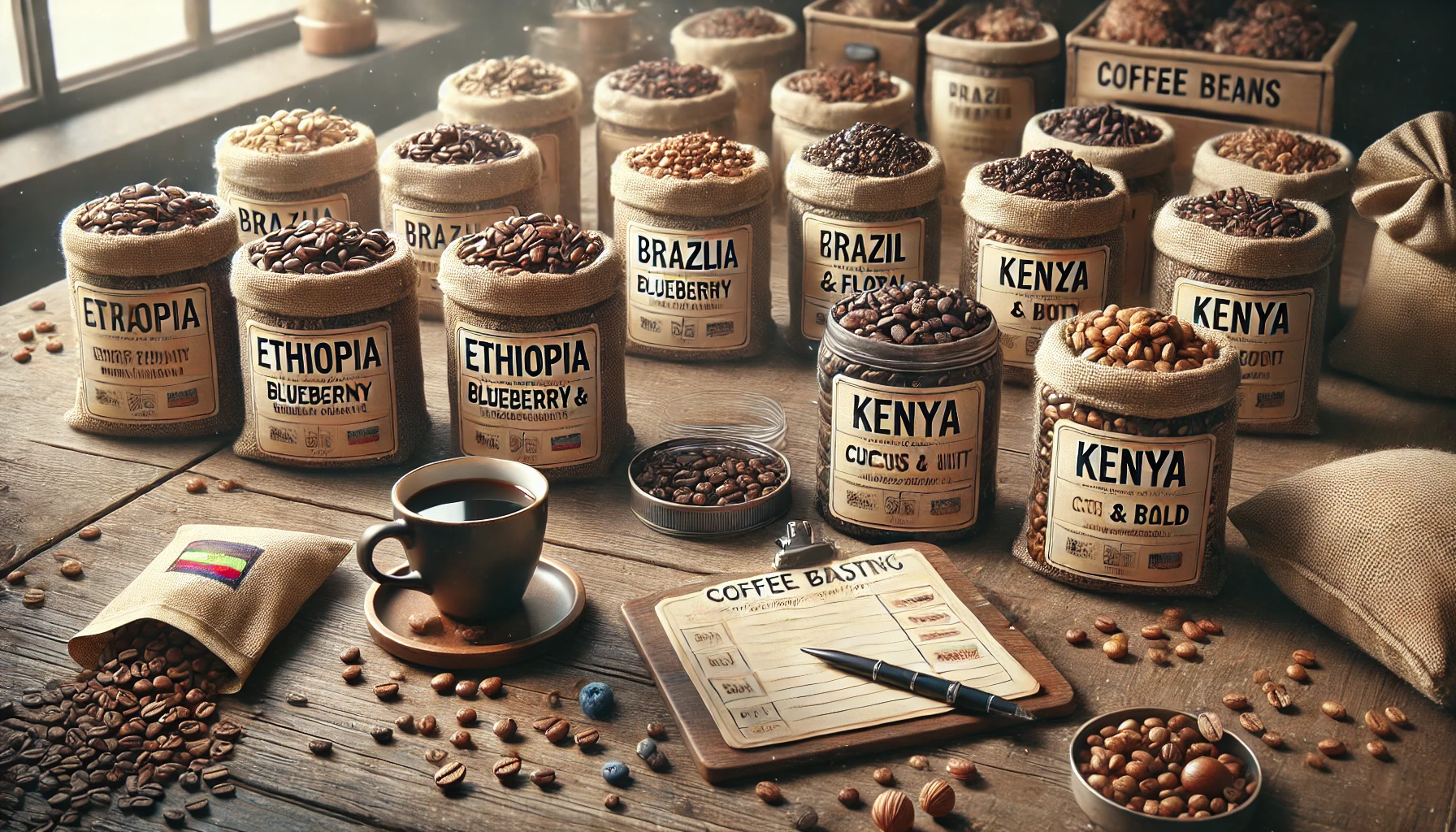
| Ethiopia | Blueberry, jasmine, winey | Fruity, floral, exotic |
| Colombia | Caramel, citrus, balanced | Sweet, easy-drinking |
| Brazil | Chocolate, nuts, creamy | Low-acid, smooth |
| Kenya | Tart blackcurrant, vibrant | Bold, juicy acidity |
| Sumatra | Earthy, herbal, woody | Deep, savory flavors |
Pro tip: Single-origin = terroir-driven flavors (like wine). Blends = balanced and consistent.
3. Arabica vs. Robusta: The Bean Showdown
Arabica (The Fancy One)
- Tastes: Sweet, nuanced, fruity.
- Caffeine: Less than Robusta.
- You’ll love it if… You’re into specialty coffee and tasting notes.
Robusta (The Tough One)
- Tastes: Strong, bitter, earthy.
- Caffeine: More kick (espresso blends love it).
- You’ll love it if… You want a cheap, high-caffeine punch.
(Most specialty coffee is Arabica. Robusta’s the muscle in Italian espresso.)
4. Processing Method (Why It’s a Big Deal)
How beans are treated after picking changes their personality:
Washed (Clean & Crisp)
- Flavor: Bright, acidic, “clean.”
- Try it in: Colombian, Costa Rican coffees.
Natural (Fruity & Funky)
- Flavor: Berry bomb, boozy, heavy body.
- Try it in: Ethiopian naturals.
Honey (Sweet & Smooth)
- Flavor: Syrupy, balanced, caramel-like.
- Try it in: Costa Rican “miel” process.
5. The Golden Rule: Whole Beans > Pre-Ground
Pre-ground coffee = stale sadness. Whole beans = freshness heaven.
Grind right before brewing for max flavor. (A $50 burr grinder beats a blade grinder any day.)
6. Match Beans to Your Brew Method
Not all beans play nice with all brewers:
| Brew Style | Best Bean Match |
|---|---|
| Pour-over | Light/medium roast, fruity (Ethiopia, Kenya) |
| Espresso | Dark roast, chocolatey (Brazil, Colombia blends) |
| French press | Medium/dark, bold (Sumatra, Guatemala) |
| Cold brew | Medium roast, low-acid (Brazil, Peru) |
7. How to Read a Coffee Bag (Without Feeling Lost)
Look for:
✔ Roast date (within 2-4 weeks = ideal).
✔ Origin (country, region, farm).
✔ Process (washed/natural/honey).
✔ Tasting notes (e.g., “milk chocolate, cherry, hazelnut”).
Ignore:
❌ “Gourmet,” “premium,” or “artisan” (meaningless marketing).
❌ Bags with no roast date (probably stale).
8. Experiment Like a Coffee Detective
- Try sample packs (many roasters sell small batches).
- Visit local cafés and ask what they’re brewing.
- Keep a coffee journal (note what you love/hate).
Final Tip: There’s No “Best” Coffee—Just YOUR Best Coffee
You might love what a coffee snob hates—and that’s okay. The “right” beans are the ones that make you excited to take that first sip.
Now go forth, taste fearlessly, and may your next cup be your best yet. ☕
What’s your current favorite coffee? Tell me in the comments—I’m always hunting for new beans to try!
This guide is super helpful for anyone looking to explore different coffee beans and flavors. I love how it emphasizes the importance of roast levels and post-picking treatments. The suggestion to taste fearlessly is inspiring and encourages experimentation. Have you tried experimenting with different beans and brewers yourself? Let me know your favorite combination!
“I prefer the medium roast, preferably with notes of almonds and chocolate.”
Great guide to choosing the perfect beans! Roast level really does make a huge difference in flavor. It’s fascinating how post-harvest processing can alter the beans’ character. I’ll definitely experiment with different brewers to find the best match. How do you determine which beans work best with your preferred brewing method?
For me, it’s all about experimentation and understanding the flavor profiles I’m after. When it comes to brewing, I’ve found that lighter roasts tend to shine in pour-overs or Chemex, while medium to darker roasts are often better suited for French press or espresso. But it’s not just about the roast level – the bean’s origin, processing method, and flavor notes all play a role in finding the perfect match. What’s your go-to brewing method, and have you noticed any beans that really stand out to you?
Great guide for coffee enthusiasts! It’s refreshing to see such a straightforward approach to understanding beans and flavors. The focus on roast levels and post-picking treatments is spot on for unlocking unique tastes. The encouragement to experiment is motivating, especially for those new to coffee exploration. Have you discovered any unexpected flavor combinations while trying different beans and brewers?