
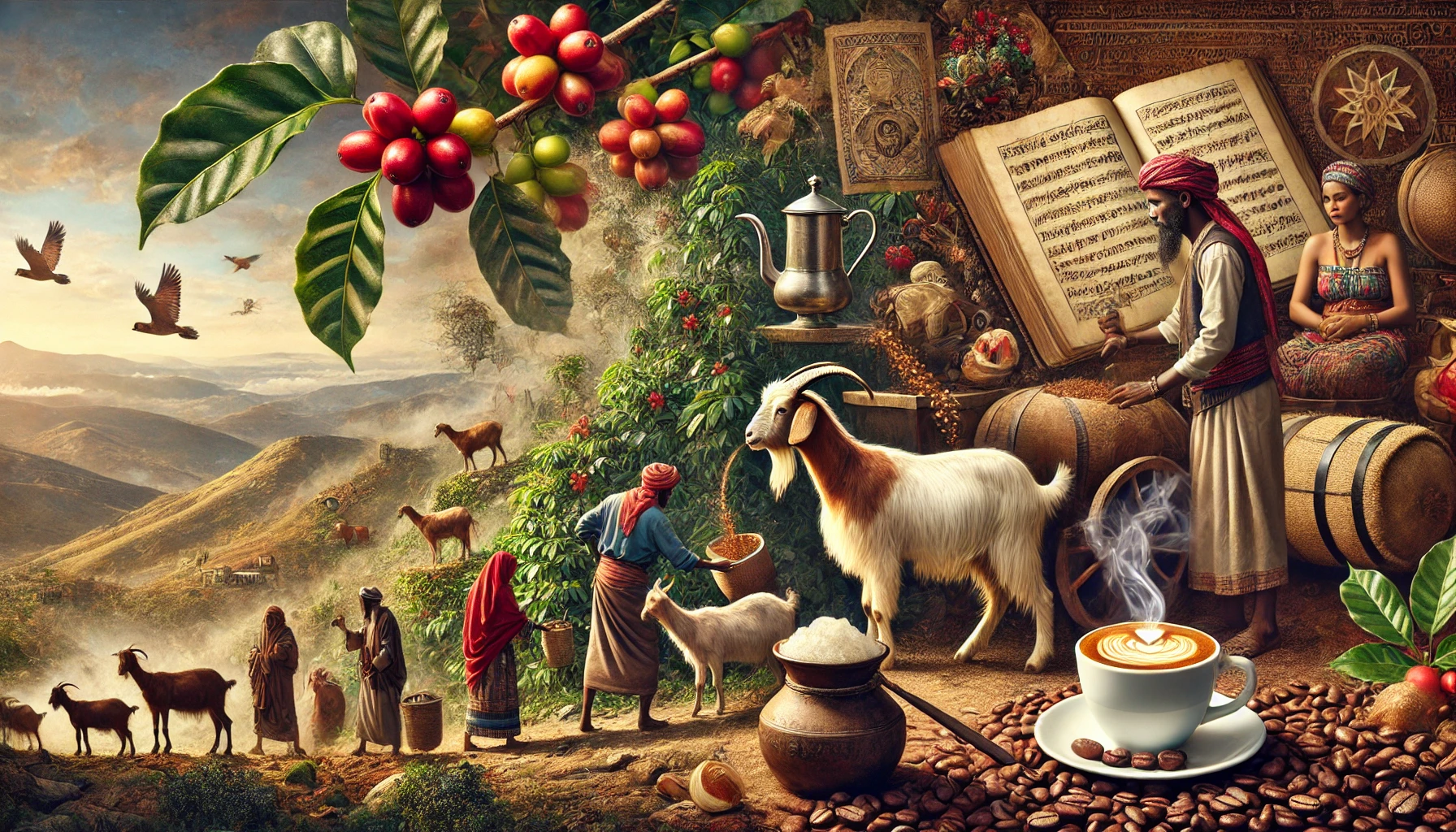
Coffee isn’t just a drink — it’s a legend in a cup. Its origin story is as rich and complex as its flavor, blending myth, history, and cultural evolution. While today we casually sip coffee in cafés or at home, this beloved beverage has roots wrapped in mystery and storytelling. In this article, we’ll explore the most famous legends about coffee’s beginnings, compare them to what history tells us, and uncover the truths hidden behind the myths.
The Legend of Kaldi: The Dancing Goats
One of the most well-known stories about the origin of coffee involves Kaldi, a young goatherd in the highlands of Ethiopia. According to the tale, Kaldi noticed that his goats became unusually energetic and even started “dancing” after eating red berries from a particular bush.
Curious, Kaldi tried the berries himself and experienced a similar burst of energy. He brought the fruit to a local monastery, where the monks used it to stay awake during their long hours of evening prayers. And thus, the magical bean began its journey.
Is It True?
Historians agree that this story is likely a myth — passed down orally through generations — but it contains a grain of truth. Ethiopia is widely accepted as the birthplace of coffee, and the use of coffee berries by local tribes is well-documented. However, there’s no written evidence of Kaldi himself, so he remains a charming legend.
Early Use of Coffee in Ethiopian Tribes
Long before coffee was brewed into a beverage, Ethiopian tribes are believed to have chewed the raw coffee cherries or ground them into a paste with animal fat for energy during long journeys or battles. These early uses focused more on the fruit as a source of strength, rather than a warm drink.
It wasn’t until people started drying and roasting the seeds — what we now know as coffee beans — that coffee began to resemble the drink we know today.
Coffee Crosses the Red Sea to Yemen
While Ethiopia may have discovered coffee, it was in Yemen where coffee as a brewed beverage began to flourish. By the 15th century, Yemeni monks were boiling coffee beans to produce a dark, energizing drink that helped them stay awake during nightly devotions.
The drink was known as qahwa — a term originally meaning “wine” in Arabic — signifying its stimulating qualities. The port of Mocha, in Yemen, became one of the earliest centers of coffee trade, and from there, coffee started its global journey.
The Role of Sufi Mystics
Yemen’s Sufi mystics used coffee not just for its energizing effects, but also as part of religious rituals. They believed that coffee helped them reach spiritual awareness and heightened states of meditation.
This association with spirituality helped coffee gain early acceptance, but it also led to controversy and opposition in some religious and political circles.
Coffee Bans and Controversies
As coffee spread through the Islamic world, it wasn’t always welcomed. Some leaders attempted to ban it, fearing that coffeehouses encouraged social dissent and unorthodox thinking. In Mecca (1511) and Cairo (1532), coffee was temporarily prohibited.
Ironically, these bans only fueled curiosity and desire for the drink. Within a few years, public demand and the undeniable appeal of coffee led to the lifting of bans, allowing coffee culture to thrive once again.
The Journey to Europe
Coffee entered Europe through Venetian traders in the 17th century. It initially sparked skepticism — some even associated it with evil due to its dark color and stimulating nature. But the tide turned when Pope Clement VIII tasted coffee and gave it his official blessing.
Soon, coffeehouses opened across London, Paris, and Vienna, attracting intellectuals, artists, and merchants. These became hubs for conversation, business, and the exchange of ideas — often referred to as “penny universities.”
What Do Historians Really Know?
Though the Kaldi legend is widely told, historians rely on more concrete evidence from the Yemeni and Islamic manuscripts of the 15th century to trace coffee’s true origins. These texts describe the cultivation, preparation, and consumption of coffee as we recognize it today.
Ethiopia’s wild coffee forests were likely the first source of coffee beans, but it was in Yemen’s monasteries that the drink was refined, ritualized, and widely adopted.
The Science Behind the Buzz
Part of coffee’s appeal — and the reason behind many origin myths — is its noticeable physical and mental effects. The caffeine in coffee stimulates the central nervous system, increasing alertness and temporarily reducing fatigue.
In times when people struggled to stay awake for religious duties or long journeys, coffee provided a natural and effective solution — making it easy to understand why it was considered almost magical in ancient times.
Why Do the Myths Persist?
The origin myths of coffee, especially the story of Kaldi and his dancing goats, have survived for centuries because they are engaging, relatable, and culturally rich. They offer a human connection to something that has become a daily routine for billions.
Storytelling gives coffee a soul — something more than just a hot beverage. Whether or not Kaldi truly existed, his tale helps people feel connected to the drink’s ancient roots.
More Than a Beverage: A Symbol of Culture and Connection
While coffee’s exact origin story may be wrapped in mystery, one thing is clear: its journey from the forests of Ethiopia to homes and cafés across the globe is extraordinary. Whether you choose to believe in dancing goats or historical manuscripts, every cup of coffee tells a story.
So next time you sip your favorite brew, take a moment to appreciate the myths and truths that traveled centuries just to reach your cup.