
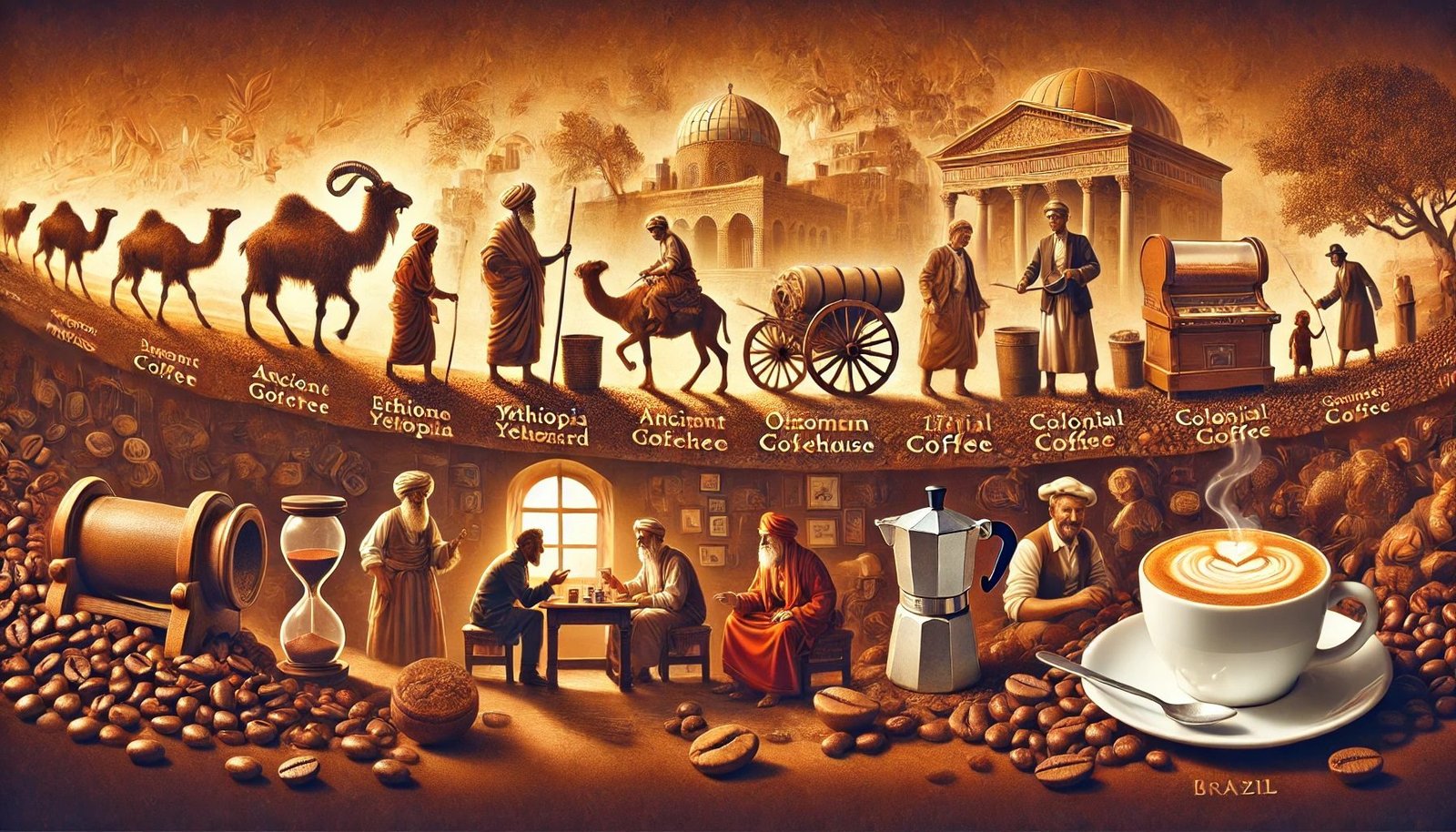
Coffee, one of the most beloved beverages across the globe, has a rich and intriguing history that spans centuries and continents. More than just a drink, coffee has shaped economies, cultures, and morning routines around the world. In this article, we’ll explore the origins of coffee, how it spread globally, and the historical moments that turned it into the global phenomenon it is today.
The Mythical Origins of Coffee in Ethiopia
The most popular legend about coffee’s discovery involves a goatherd named Kaldi in the Ethiopian region of Kaffa, around the 9th century. According to the tale, Kaldi noticed that his goats became unusually energetic after eating the red cherries of a certain plant. Curious, he tried them himself and experienced a similar burst of energy.
Monks in a nearby monastery reportedly took interest in this discovery and began brewing the cherries into a drink that helped them stay awake during long nights of prayer. While the story is likely apocryphal, it reflects Ethiopia’s deep historical connection to coffee.
The First Brewed Beans in Yemen
By the 15th century, coffee cultivation and trade had moved across the Red Sea into Yemen, where Sufi monks used the beverage to sustain their spiritual practices. The Yemenis began roasting the beans, an innovation that helped evolve coffee into the aromatic drink we know today.
The port city of Mocha became a central hub for the coffee trade. In fact, the term “mocha” — often associated with the chocolate-infused coffee beverage — originally referred to this city, not the flavor.
Coffee Spreads Through the Islamic World
Coffee’s stimulating effects made it popular among Muslim communities, and it quickly spread throughout the Islamic world — from Persia to Egypt and the Ottoman Empire. It was often consumed in coffeehouses, which became centers of social interaction, intellectual discussion, and even political debate.
Interestingly, coffeehouses were sometimes met with suspicion by religious and political authorities, who feared they might foster dissent. Despite attempts to ban the drink in places like Mecca and Constantinople, coffee’s popularity persisted.
The Arrival of Coffee in Europe
Coffee reached Europe in the 17th century through trade routes established by Venetian merchants. Initially met with suspicion and sometimes called the “bitter invention of Satan,” coffee eventually gained acceptance — thanks in part to Pope Clement VIII, who reportedly blessed it after tasting it.
Europeans quickly embraced coffee, and coffeehouses began to flourish in major cities like London, Paris, and Vienna. In England, coffeehouses were nicknamed “penny universities” because for the price of a penny, one could gain access to lively debates and conversations.
Coffee and the Age of Enlightenment
In 18th-century Europe, coffeehouses became breeding grounds for new ideas, attracting philosophers, artists, and writers. Notable thinkers like Voltaire and Rousseau frequented these establishments. The stimulating effects of coffee provided an intellectual edge that alcohol simply couldn’t match.
In this way, coffee became more than a drink — it became a symbol of progress, knowledge, and social interaction.
The Global Expansion Through Colonialism
European powers saw the commercial potential of coffee and began cultivating it in their colonies. The Dutch were the first to plant coffee in Java (Indonesia), followed by the French in the Caribbean, the Portuguese in Brazil, and the Spanish in Central America.
Each region contributed to the unique flavor profiles we associate with different coffee-growing areas today. Unfortunately, this expansion often relied on enslaved labor and the exploitation of indigenous lands — a dark chapter in coffee’s otherwise vibrant history.
Brazil Becomes a Coffee Giant
In the 19th century, Brazil emerged as the world’s leading coffee producer — a position it still holds today. The growth of Brazil’s coffee industry helped shape its economy and global identity. Coffee from Brazil is often known for its nutty, chocolatey flavor and low acidity, making it a favorite in blends worldwide.
The Rise of Coffee Culture in the 20th Century
The 20th century saw rapid industrialization and the emergence of large-scale coffee brands like Nestlé, Folgers, and Maxwell House. Instant coffee became popular during World War II for its convenience, especially among soldiers.
By the 1970s and 1980s, the concept of specialty coffee began to take hold, with companies like Starbucks leading the charge. Coffee was no longer just a drink — it was an experience, a lifestyle, and a form of self-expression.
Specialty Coffee and the Third Wave Movement
Today, we’re living in what many call the “Third Wave” of coffee — a movement that treats coffee as an artisanal product, much like wine. This era emphasizes traceability, sustainability, and the unique characteristics of beans from specific farms and regions.
Baristas are trained like sommeliers, and brewing methods have become more scientific and precise. The goal is to appreciate coffee in all its complexity and to honor the people who grow and harvest it.
Why Coffee History Matters Today
Understanding coffee’s journey helps us appreciate every cup more deeply. From its mystical beginnings in Ethiopia to its role in Enlightenment-era Europe and its rise as a global commodity, coffee has shaped the world in remarkable ways.
By knowing its roots, we also become more conscious consumers — aware of the labor, culture, and history behind our daily brew.